
Where Are We Headed? / Mihin olemme matkalla?
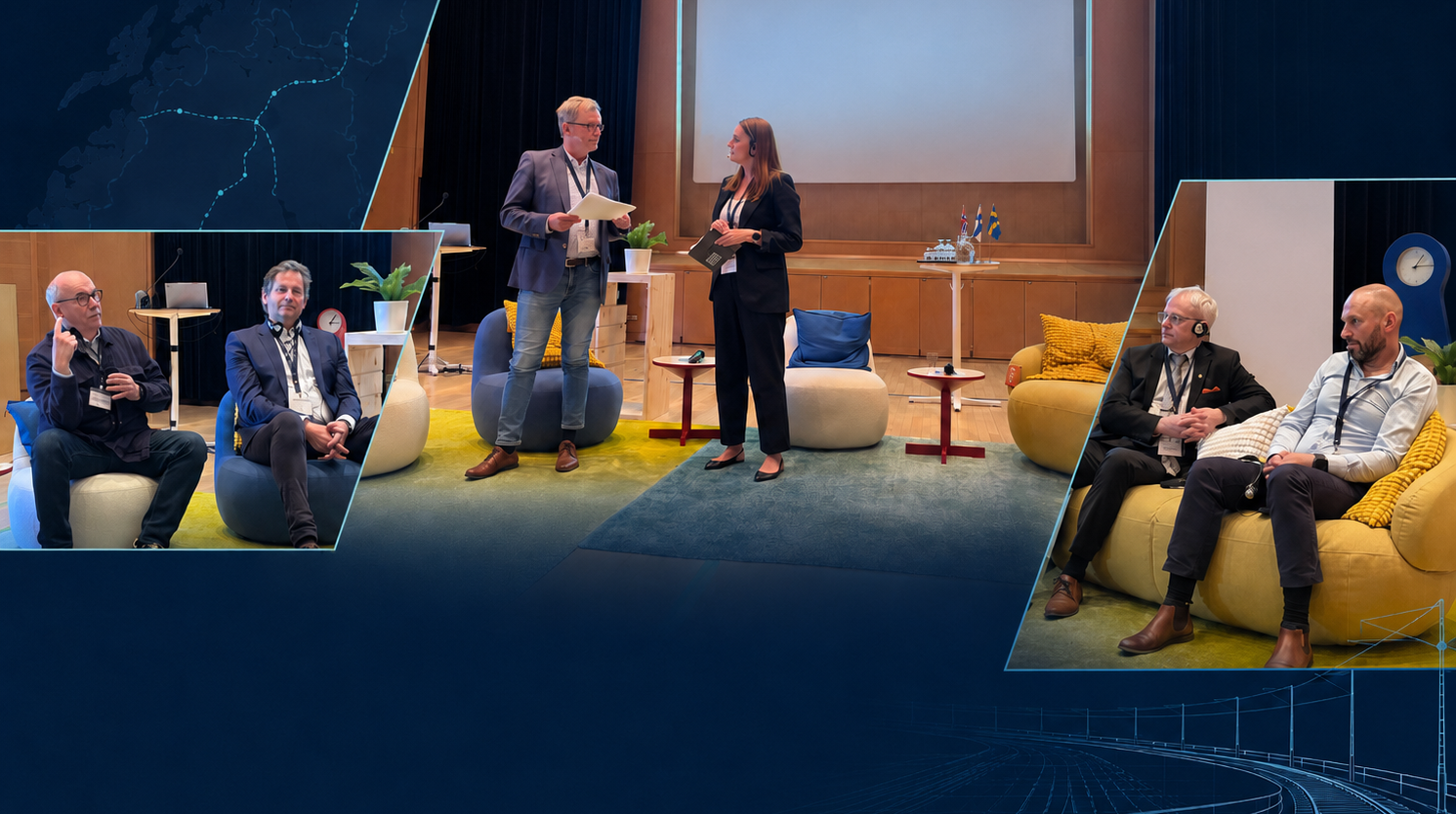
Day two of the seminar “Where Are We Headed? / Mihin olemme matkalla?” brought together representatives from Sweden, Finland and Norway around an issue that is rapidly growing in strategic importance for the entire High North: the development of a more integrated, robust and cross-border railway system.
The seminar was organised by Gränstjänsten, the Tornedal Council, HaparandaTornio Border Cooperation and Arctic Rail, and was characterised by a clear sense that developments are now accelerating — particularly in Finland and Norway.
A recurring theme in the discussions was the risk that Sweden may increasingly be perceived as the weaker link in this development, while investments, priorities and decisions are now being made in neighbouring countries. At the same time, participants emphasised the importance of viewing the railways of the High North as a shared trilateral system rather than separate national sections.
Arctic Rail and several participants therefore highlighted the need to develop a common system perspective for the entire corridor — from the Atlantic and Narvik via the Iron Ore Line and further into Finland.
One concrete example discussed was Finland’s ongoing work on introducing European standard gauge from Kemi towards the Swedish border. At the same time, several actors returned to the fact that the capacity between Kiruna and Narvik remains the major bottleneck in fully utilising the Atlantic coast as a strategic transport route.
Narvik Port and Norwegian stakeholders particularly pointed out that the Iron Ore Line between Kiruna and Riksgränsen currently represents the system’s greatest limitation and uncertainty. This concerns not only industrial transport flows, but also the possibility of developing robust logistics corridors for Norwegian seafood towards Finland, Sweden, southern Norway and Europe.
In parallel, there is also a rapidly growing focus on defence logistics, NATO cooperation and resilient transport corridors from the Atlantic coast towards Finland.
A clear conclusion from the seminar was therefore that Arctic Rail needs to continue developing as a shared platform for describing, analysing and communicating the potential of the railways of the High North as a coherent trilateral system. The ambition is to use facts, scenarios and shared priorities to contribute to a broader understanding of why investments in these corridors are strategically important — not only regionally, but also nationally and at European level.
Several future development paths were also highlighted during the day:
- European standard gauge further towards Kemi and Oulu,
- upgrading of the Inland Line and improved transversal connections to the Main Line,
- the future Pajala railway towards Kolari and further on to Sodankylä/Rovaniemi,
- development of logistics hubs, terminals and ports.
- And all of this ultimately depends on a long-term strengthening of capacity between Kiruna and Narvik.
We have the opportunity to create a rational, high-performance system by acting now so that the Iron Ore Line between Kiruna and Narvik can move from being a political and logistical bottleneck to becoming an enabler of trilateral system investments within a strong Arctic economy.